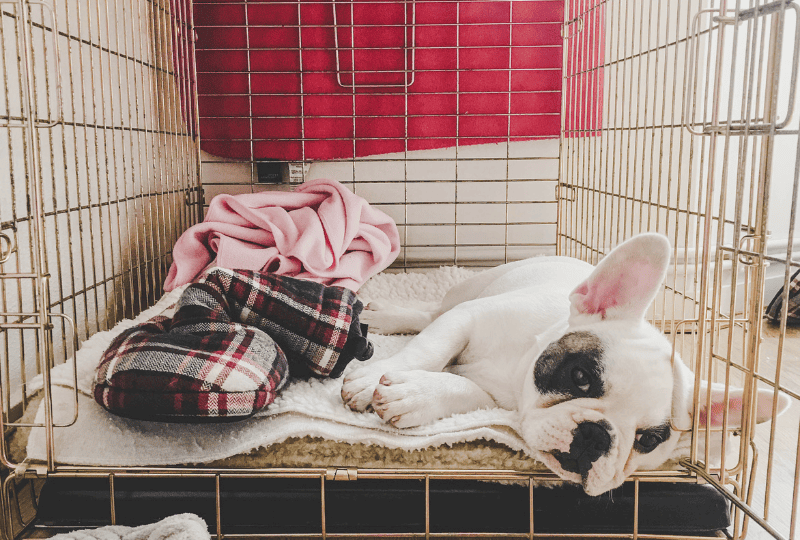
That first week home with a new puppy? Pure magic by day, total chaos by night. You’re exhausted from work (or Zoom calls in your home office), the house is quiet, and suddenly your fluffy 8-week-old is wailing from the crate like it’s the end of the world. Sound familiar?why peoples says: How to Crate Train a Puppy at Night?
In 2026, crate training at night isn’t about toughing it out anymore—it’s smarter, gentler, and way more effective thanks to positive methods backed by the AKC and modern tools like pet cameras. According to recent AKC guidelines, most US pet parents who crate train from day one see their puppies sleeping through the night by 12-16 weeks, and crate use is recommended by vets for safety and housebreaking in over 70% of dog-owning households.
I’ve helped dozens of families (from NYC apartments to Texas suburbs) turn those sleepless nights around. Here’s a realistic, step-by-step nighttime routine that works fast—no endless crying, no guilt trips.
Why Nighttime Crate Training Feels So Hard (And Why It’s Worth It)
Puppies aren’t whining to manipulate you—they’re tiny babies missing littermates, warmth, and the pack. At night, the house is dark and silent, amplifying loneliness. Plus, their bladders are tiny: follow the “age in months +1” rule (e.g., 2-month-old holds ~3 hours max, per AKC and vet consensus in 2026).
Related Article: Why Is My Puppy Whining in the Crate? Complete 2026 Guide to Stop It Fast for Happy Nights
Benefits? Crate training speeds housebreaking (dogs hate soiling their den), builds confidence, and prevents chewing disasters while you’re asleep. In the US, where 65+ million households have dogs (ASPCA 2024-2025 data trends), consistent nighttime crating reduces accidents and anxiety long-term.
Prep Your Setup: Make the Crate a Cozy Den Before Bedtime
Start daytime: Place the crate in a family spot, door open, toss treats inside. But for nights, location matters most.
- Bedside Placement — Put it right next to your bed (on a nightstand if tiny). You hear needs instantly, and your scent/presence soothes separation anxiety.
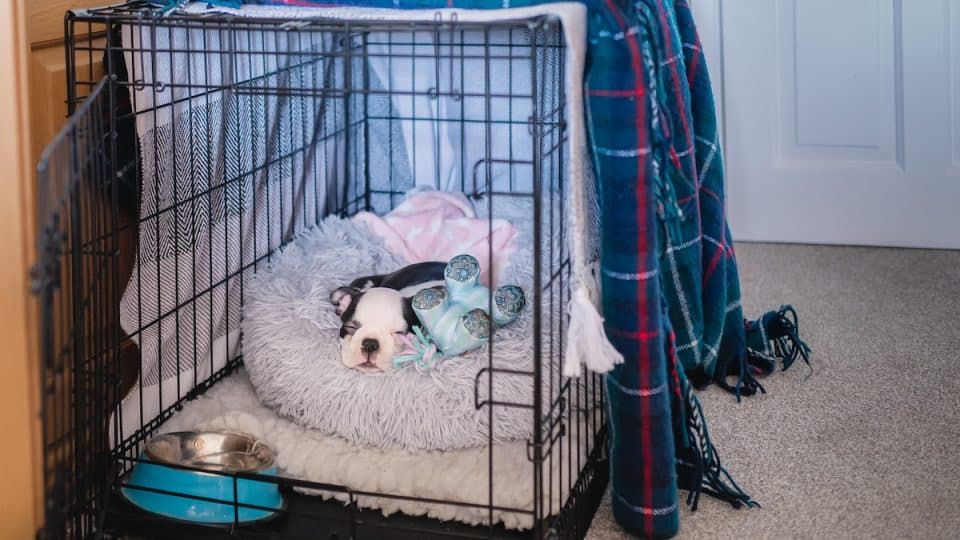
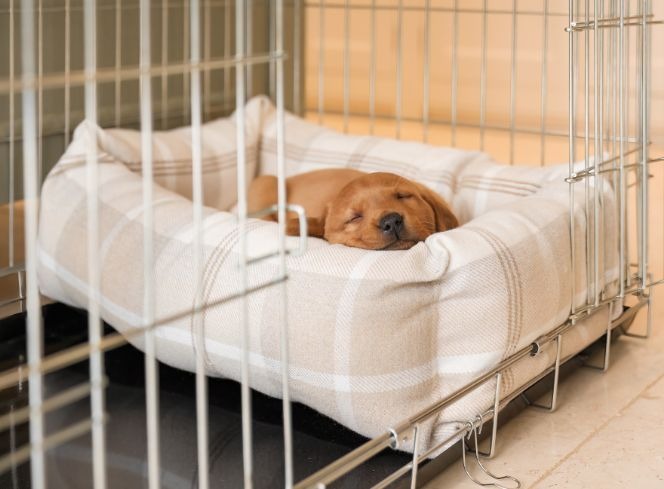
- Size & Type — Use a wire crate (MidWest iCrate popular in US) with divider—snug for security but expandable. Cover 3 sides with a breathable blanket for den feel (great for Midwest winters or Florida humidity).
- Comfort Essentials — Soft, washable bedding (avoid anything chewable long-term). Add a heartbeat toy like Snuggle Puppy (mimics littermates—game-changer for many US owners).
- Tech Boost (2026 Must-Have) — A smart pet camera (Furbo 360 or Petcube Cam) lets you check via app, talk soothingly, or toss treats remotely. No more guessing if whining is potty or panic.
The Ultimate Nighttime Routine: Step-by-Step for Quiet Sleep
Follow this from day one. Adjust for age/breed (e.g., high-energy Labs need extra play; anxious rescues more comfort).
- Wind-Down Hour (7-9 PM)
Last big play session—tug, fetch, or puzzle toy. Tire them out mentally/physically. No rough play after 8 PM; switch to calm chews. - Final Potty & Water Cutoff
Last outdoor potty ~30 min before bed. No water/food after 7-8 PM (prevents accidents). For 8-12 week olds, expect 1-2 middle-night breaks. - Crate Introduction Ritual
Lead in calmly with a treat or stuffed KONG (frozen peanut butter). Say “bedtime” positively. Cover partially, add white noise (fan/app) to block sounds. - Lights Out & Monitoring
Dim lights, settle in bed. If whining starts mild, wait 1-2 min—often they settle. Use app camera to peek (smart cams alert motion). - Respond Smartly to Whining
- Potty need? (Pacing, circling) → Quick, boring trip out. No play/lights.
- Distress? (High-pitched, frantic) → Soft voice reassurance or finger pets through bars.
- Attention? → Ignore after needs met; reward quiet moments.
- Morning Reset
First thing: Potty praise, then short play. Consistency builds fast results.
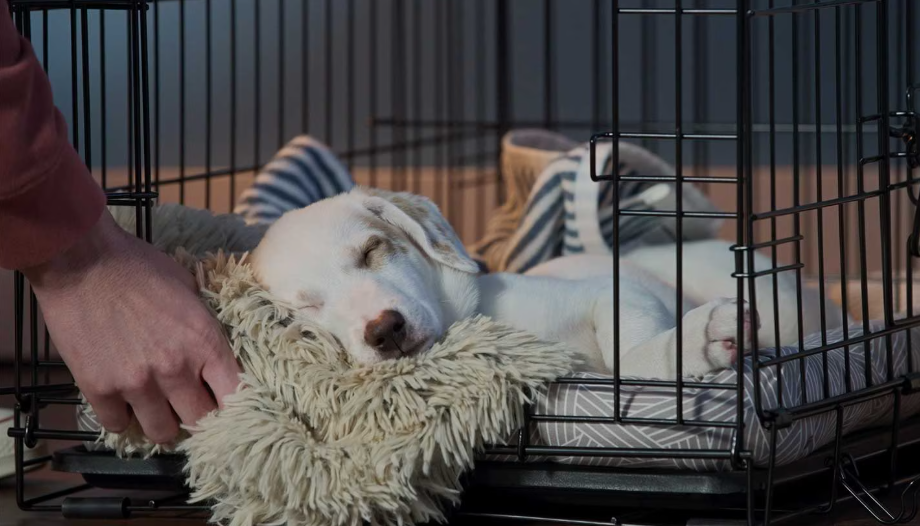
Puppy Bladder & Sleep Schedule Table (2026 Vet-Approved)
| Puppy Age | Max Hold Time (Awake/Day) | Night Holds (Sleeping) | Expected Breaks | Tips for US Homes |
|---|---|---|---|---|
| 8-10 weeks | 2-3 hours | 4-6 hours (with breaks) | 1-2/night | Bedside crate; Midwest cold? Add heated pad |
| 11-14 weeks | 3-4 hours | 6-8 hours | 0-1/night | Apartment? Use noise machine to avoid neighbor complaints |
| 15-16 weeks | 4-5 hours | 7-9 hours | Usually none | High-energy breeds? Extra evening exercise |
| 4-6 months | 5-7 hours | 8+ hours | None | Transition to full nights; monitor with camera |
(Source: AKC guidelines + vet consensus; adjust for individual pup.)
7-Day Challenge: From Whining to Peaceful Nights
Day 1-2: Bedside crate, every 2-3 hours potty. Comfort items + camera check.
Day 3-4: Stretch to 3-4 hours; ignore mild fuss after potty check. Reward quiet.
Day 5-6: One break max; use app voice for calm.
Day 7: Full night? Celebrate! If not, extend comfort phase.
Most US families see big improvements by week 2 with consistency.
Troubleshooting Common Nighttime Issues
- Persistent Howling? Rule out pain (vet check). Add pheromone diffuser (ThunderEase).
- Apartment Noise Worries? White noise + covered crate; many NYC/California owners succeed this way.
- Breed Differences? Labs/Goldens tire faster with play; Chihuahuas/Anxious rescues need extra scent items.
- Working Parents? Daytime crate naps build tolerance; evening routine key.
Frequently Asked Questions
How long until my puppy sleeps through the night?
Most hit 6-8 hours by 12-16 weeks with routine; full nights by 4-6 months.
Should I let them cry it out?
Not fully—respond to needs to avoid anxiety. Ignore attention cries after checks.
What if whining won’t stop?
Camera helps diagnose. Vet for medical; trainer for anxiety. Never punish.
Is crate training cruel?
No—AKC/ASPCA endorse it as safe den. Done positively, pups love it.
Best camera for monitoring?
Furbo 360 or Petcube—treat toss + alerts popular in 2026.