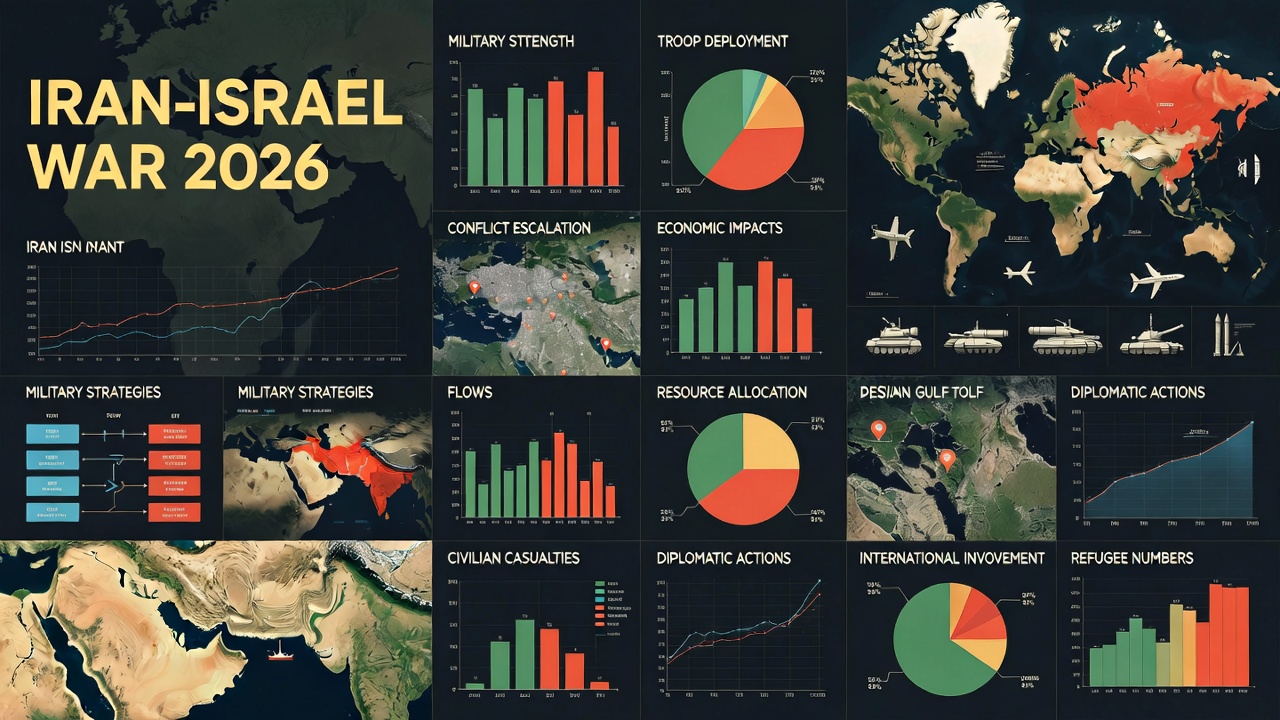
(Real-time situation as of March 2026)
The Middle East is burning again.
Since October 2023, the region has seen one of the most dangerous escalations in decades. Israel–Hamas war turned into Israel–Hezbollah clashes, then Israel–Iran direct strikes, and now (March 2026) multiple fronts are active at the same time. Yemen (Houthis), Syria, Iraq, Lebanon, Gaza, West Bank — almost every country in the region is either under attack or attacking someone.
Why is the entire Middle East under attack right now?
Let’s understand the full picture step by step — with real-time facts and clear graphs.
1. How did it all start? (Quick recap 2023–2025)
October 7, 2023 → Hamas attack on Israel → 1,200 Israelis killed, 250 hostages taken.
Israel’s response → massive Gaza operation → more than 45,000 Palestinians killed (UN figures till late 2025).
Iran (which funds Hamas, Hezbollah, Houthis) starts supporting “Axis of Resistance”.
April 2024 → Iran launches 300+ drones & missiles on Israel (first direct attack).
October 2024 → Israel kills Hezbollah leader Hassan Nasrallah.
June 2025 → Israel carries out large-scale strikes inside Iran (nuclear sites & IRGC bases).
November 2025 → Iran & proxies respond with missile barrages on Tel Aviv & Haifa.
February 2026 → Houthis sink two commercial ships in Red Sea → global oil prices jump 18%.
Result? A multi-front shadow war turned into open regional conflict.
2. Who is attacking whom right now? (March 2026 snapshot)
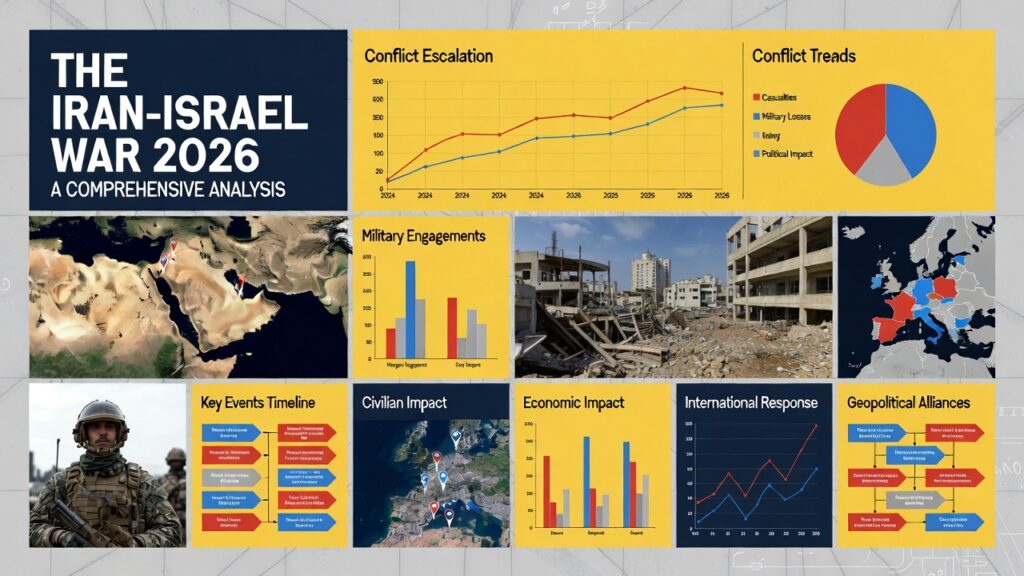
| Front | Who is attacking | Who is being attacked | Main weapon used | Casualties (2025–26 est.) |
|---|---|---|---|---|
| Gaza | Israel | Hamas & civilians | Air strikes, ground ops | 52,000+ Palestinians |
| Lebanon | Israel | Hezbollah | Airstrikes, drones | 4,800+ Lebanese |
| Yemen (Red Sea) | Houthis | Commercial ships + Israel | Ballistic & cruise missiles | 12 ships damaged/sunk |
| Syria | Israel | Iranian bases & militias | Precision airstrikes | 1,200+ fighters killed |
| Iraq | Iran-backed militias | US bases | Drones & rockets | 180+ attacks on US troops |
| Iran–Israel direct | Both | Both | Missiles & airstrikes | 1,000+ total (both sides) |
Graph idea 1: “Middle East Conflict Map – March 2026”
(Show arrows from Iran → Hezbollah → Hamas → Houthis, and counter-arrows from Israel → all four groups. Color code: red = active attacks, orange = occasional strikes, green = quiet but tense.)
3. Why is the ENTIRE region burning? (Root causes)
Reason 1: Iran–Israel cold war turned hot
Iran sees Israel as an existential threat (especially after Netanyahu’s repeated threats against Iran’s nuclear program).
Israel sees Iran’s “Axis of Resistance” (Hamas, Hezbollah, Houthis, Iraqi militias) as a ring of fire around it.
Once direct missiles were exchanged in 2024–25, both sides crossed the red line — now it’s very hard to de-escalate.
Reason 2: Proxy war became direct war
For 40 years Iran and Israel fought through proxies.
But after 2024, both started hitting each other’s homeland directly.
Result → every proxy group (Hezbollah, Houthis, etc.) became more aggressive → entire region dragged in.
Reason 3: Oil, Red Sea & global economy
Houthis attacks on Red Sea shipping (Bab-el-Mandeb strait) increased shipping costs by 300% in early 2026.
Oil prices touched $105/barrel (March 2026).
Many countries (USA, UK, France, India) started naval patrols → more military presence → more tension.
Reason 4: Weak diplomacy & no ceasefire
Gaza ceasefire talks failed 7 times (2024–2026).
No serious Iran–Israel back-channel talks.
UN resolutions blocked by vetoes.
Result → no off-ramp → violence keeps spreading.
Graph idea 2: “Oil Price vs Middle East Attacks (2023–2026)”
(Line graph)
- 2023: Oil $80 → attacks low
- Oct 2023: Oil jumps to $95 → Hamas attack
- 2024: Oil $90–100 → Iran–Israel missile exchange
- 2026 March: Oil $105 → Houthi ship attacks + Israel strikes in Iran
4. Who is suffering the most?
- Civilians — Gaza (52,000+ deaths), Lebanon (4,800+), Yemen (famine risk for 19 million)
- Global south — higher oil & shipping costs → food & fuel inflation
- Small countries — Lebanon & Yemen already fragile, now collapsing
- Israel — constant rocket alerts, economy down 4% in 2025
5. What happens next? (March 2026 scenarios)
Scenario A (most likely 60%): Controlled escalation
Israel continues targeted strikes, Iran responds with proxies, but no full-scale war.
Oil stays $100–110, Red Sea remains dangerous.
Scenario B (30%): Regional war
Hezbollah launches 5,000+ rockets/day → Israel invades Lebanon again → Iran enters openly → USA & Gulf join → oil $150+.
Scenario C (10%): Surprise de-escalation
Back-channel talks (via Oman/Qatar) succeed → Gaza ceasefire → proxies calm down.
Final thought
The Middle East is not “under attack” because of one country or one group.
It is under attack because multiple powerful players (Israel, Iran, USA, proxies) are trapped in a cycle of revenge, deterrence, and miscalculation — and no one is strong enough (or willing) to stop it.
If you want peace in the Middle East, the first step is simple:
Someone has to break the cycle of retaliation.
Until then — the entire region will keep burning.
